





Above the Fold: Top stories of the day
1. Search engine and tech behemoth Google decided to restructure itself, putting the original founders in charge of a holding company called Alphabet, leaving Google itself to be run by Indian-born Sundar Pichai.
2. Activist Teesta Setalvad was granted anticipatory bail by the Bombay High Court in a case related to violation of laws on foreign funding, despite authorities asking for her to be arrested.
3. More than 15,000 people including top industrialists have launched an online signature campaign calling on the country's lawmakers to allow Parliament to function.
4. China on Tuesday devalued the yuan by 1.9%, it steepest reduction in decades, worrying global markets and putting pressure on Indian exports.
The Big Story: Whose card is it anyway?
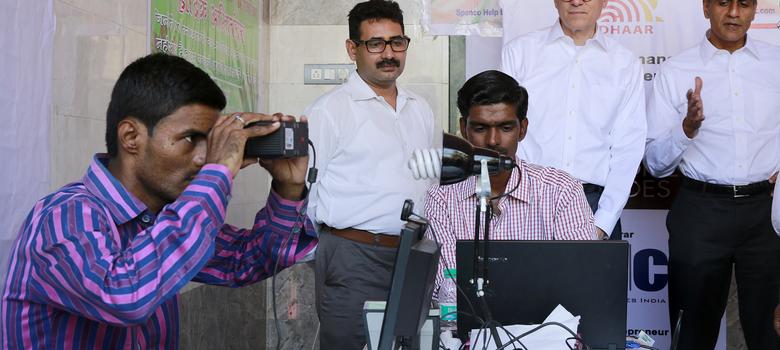
The long-running battle over the way the government has wielded the Aadhar card, a project of the previous administration to create a national user identity database with numbers for every citizen, has hit a major obstacle in the Supreme Court. In an interim judgment on Tuesday, the court restricted the use of the card saying it could be used to give citizens subsidies on food and fuel but by no means can be made mandatory for all government services. Moreover, the court asked the government to put out ads saying that Aadhar was not compulsory, and restricted the government from using it for a number of services, like passport registration or school admission.
The court has also referred the central question of the petition, whether Aadhar itself violates the right to privacy, to a larger bench, while noting there are unresolved contradictions in the law on this issue. Activist and scholar Usha Ramanathan, who has opposed the Aadhar project from the beginning, breaks the judgment down in the Indian Express.
The United Progressive Alliance claimed that the programme to issue every citizen a unique identity number would make the delivery of government services much more efficient. But with the Supreme Court now restricting its use, though, how useful will an Aadhar card actually be?
The Big Scroll: Scroll.in on the day's biggest story
India's Unique Identity Dilemma isn't about those who enrol in Aadhaar, but those who don't.
Politicking & Policying
1. Prime Minister Narendra Modi attempted to complain about the Congress without mentioning the party's name, by blaming "some people" for misusing Parliament at a Bharatiya Janata Party meeting.
2. The Goods and Services Tax Bill, which the government had hoped to pass in this session, was moved without prior notice in the Rajya Sabha on Tuesday, prompting pushback from the Opposition. The government intends to move it again today as a "sign" to the people of its intent to progress despite the Parliamentary logjame.
3. Dramatic scenes in the Gujarat High Court on Tuesday included comments suggesting there were several scams involving judges, after the court constituted a bench to look into allegations that 27 sitting and retired judges had been allotted government land.
4. The National Investigation Agency has said it will not challenge the conditional bail granted to Naba Kumar Sarkar, the former Rashtriya Swayamsevak Sangh member known as Swami Aseemanand, who is accused in the Samjhauta blasts case that killed 68 people.
5. Samajwadi Party chief Mulayam Singh Yadav came in for a bit of heckling in the Parliament as he sought to speak, when Congress Members of Parliament protested his decision to participate in proceedings.
Punditry
1. The belief that the land acquisition law will succeed by being left to states' discretion could be problematic, writes MJ Antony in the Business Standard, saying they haven't always been successful.
2. Niranjan Rajadhyaksha in Mint asks how different Indian monetary policy would have been had it been set by committee over the last few years. (Answer: not very).
3. In the Telegraph, KP Nayar refrains from naming names, but anyways tells us the backstory on the spin which came after the Ufa joint-statement between India and Pakistan.
Don't Miss
Nayantara Narayanan writes about an Indian scientist who spent 40 years studying a wasp. He has received Germany's highest civilian honour.
We welcome your comments at
letters@scroll.in.
1. Search engine and tech behemoth Google decided to restructure itself, putting the original founders in charge of a holding company called Alphabet, leaving Google itself to be run by Indian-born Sundar Pichai.
2. Activist Teesta Setalvad was granted anticipatory bail by the Bombay High Court in a case related to violation of laws on foreign funding, despite authorities asking for her to be arrested.
3. More than 15,000 people including top industrialists have launched an online signature campaign calling on the country's lawmakers to allow Parliament to function.
4. China on Tuesday devalued the yuan by 1.9%, it steepest reduction in decades, worrying global markets and putting pressure on Indian exports.
The Big Story: Whose card is it anyway?
The long-running battle over the way the government has wielded the Aadhar card, a project of the previous administration to create a national user identity database with numbers for every citizen, has hit a major obstacle in the Supreme Court. In an interim judgment on Tuesday, the court restricted the use of the card saying it could be used to give citizens subsidies on food and fuel but by no means can be made mandatory for all government services. Moreover, the court asked the government to put out ads saying that Aadhar was not compulsory, and restricted the government from using it for a number of services, like passport registration or school admission.
The court has also referred the central question of the petition, whether Aadhar itself violates the right to privacy, to a larger bench, while noting there are unresolved contradictions in the law on this issue. Activist and scholar Usha Ramanathan, who has opposed the Aadhar project from the beginning, breaks the judgment down in the Indian Express.
The United Progressive Alliance claimed that the programme to issue every citizen a unique identity number would make the delivery of government services much more efficient. But with the Supreme Court now restricting its use, though, how useful will an Aadhar card actually be?
The Big Scroll: Scroll.in on the day's biggest story
India's Unique Identity Dilemma isn't about those who enrol in Aadhaar, but those who don't.
Politicking & Policying
1. Prime Minister Narendra Modi attempted to complain about the Congress without mentioning the party's name, by blaming "some people" for misusing Parliament at a Bharatiya Janata Party meeting.
2. The Goods and Services Tax Bill, which the government had hoped to pass in this session, was moved without prior notice in the Rajya Sabha on Tuesday, prompting pushback from the Opposition. The government intends to move it again today as a "sign" to the people of its intent to progress despite the Parliamentary logjame.
3. Dramatic scenes in the Gujarat High Court on Tuesday included comments suggesting there were several scams involving judges, after the court constituted a bench to look into allegations that 27 sitting and retired judges had been allotted government land.
4. The National Investigation Agency has said it will not challenge the conditional bail granted to Naba Kumar Sarkar, the former Rashtriya Swayamsevak Sangh member known as Swami Aseemanand, who is accused in the Samjhauta blasts case that killed 68 people.
5. Samajwadi Party chief Mulayam Singh Yadav came in for a bit of heckling in the Parliament as he sought to speak, when Congress Members of Parliament protested his decision to participate in proceedings.
Punditry
1. The belief that the land acquisition law will succeed by being left to states' discretion could be problematic, writes MJ Antony in the Business Standard, saying they haven't always been successful.
2. Niranjan Rajadhyaksha in Mint asks how different Indian monetary policy would have been had it been set by committee over the last few years. (Answer: not very).
3. In the Telegraph, KP Nayar refrains from naming names, but anyways tells us the backstory on the spin which came after the Ufa joint-statement between India and Pakistan.
Don't Miss
Nayantara Narayanan writes about an Indian scientist who spent 40 years studying a wasp. He has received Germany's highest civilian honour.
"I have been stung a dozen times but never complained. I guess that’s what love does to you.” Raghavendra Gadagkar’s love for Ropalidia marginata has lasted some 35 years and, as he wrote in a textbook on social behavior, it is unlikely he will ever abandon this love. The sociobiologist, who on Friday was awarded Germany’s highest civilian honour – The Cross of Order of Merit – has spent his scientific career studying the behavior patterns of this wasp found in South India. He finds that wasp interactions hold up a mirror to human societies.
